12/7/15

What's Behind the 'Real Change' Phenomenon?

Well, here we are in Canada, with the new Trudeau Government's massive 'real change' program underway at home and around the globe, while the U.S. Presidential marathon - only a month shy of he Iowa caucuses - well underway. What ties these election campaigns together is one thing -  the desire for 'real change'.
Canada's new Parliament with the Liberals firmly in power, met for their first Question Period today, and it's a preview of what is to come. A change in policies and, one hopes, a change in tone. My preview of the expected changes in Question Period are quoted in this CBC News article.
Once every generation, comes a tidal wave of change in the political world - in Canada, that was 1968 when Pierre Trudeau brought massive change to Canada - in politics, public policy, and style. In 1984 it was Brian Mulroney.
In 1960, it was John F. Kennedy who woke America up after the sleepy Eisenhower '50s with panache and vision. In 1980 it was Ronald Reagan. In 2008 it was Barack Obama.
The  Tidal Wave Hits Canada
Flash forward to 2015 and that huge tidal wave is crashing into    the world of politics in both Canada and the United States. Justin Trudeau, leader of the third party, put together a platform and a campaign strategy that swept into power, understanding that desire for 'real change' - not just in the  'what' but the 'how' of politics and policies.
The Speech from the Throne, the agenda setter for the next year or two of Parliament, was titled, 'Making Real Change Happen'. That pretty well says it all. From middle class tax cuts, to taxing the rich, to climate change and many social issues, the 'change' agenda is underway.
The Tidal Wave Hits the U.S.
A 'steal' from Ronald Reagan
In the Presidential race, Donald Trump is able to throw caution (and common sense) to the wind and double down on the 'hard right' side of almost every issue. He has been leading the Republican race for months by throwing conventional wisdom on its ear and catering to the (primary--voting) Republican base. The latest example includes today's announcement that he wants to ban all Muslims from entering the country.
It feeds on - and feeds - racist stereotypes that the San Bernardino and Paris terrorist attacks have intensified.
Not the real Larry David

And on the farthest side of the political spectrum from Trump is Sen. Bernie Sanders (D-VT) (a.k.a. Larry David) who has channeled the public's antipathy to 'politics as usual' into becoming a contender for the Democratic nomination.

Four years ago, who would have thought that either man would be a serious contender for the nominations of their parties?
What's Behind the 'Real Change' Phenomenon?
1. A feeling that 'politics as usual' has led the world to the mess that we're in. This would include global issues such as climate change and Syria. Both are huge generators of demand for real change for the left and the right.
2. The randomness of the home grown ISIL terrorist attacks has brought the specter of fear home to roost. In Canada, it's a much lower-grade 'concern' as the public aren't arming themselves in anticipation of Armegeddon. However, their concern about security was loud enough that the Trudeau government was forced to do a minor 'pivot' on their promise to bring over 25,000 Syrian refugees by December 31st, 2015. Instead, they moved the deadline to the end of February 2016 to ensure that the security checks would be thoroughly conducted. By listening and shifting accordingly, the public will forgive such a move.
3. Safe, 'moderate' politicians seem so yesterday. In the Canadian election, NDP Leader Tom Mulcair, leading in the polls, positioned himself as a 'safe' balanced budget kind of social democrat in order to buffer himself from the wild 'tax and spend' accusations that would rein down on him and his party. Justin Trudeau, sensing that was the wrong way to go, adeptly moved to the 'left' of him on the economy -  promising deficits of $10 billion annually - as well as on social issues (legalizing marijuana). Trudeau became the most viable and strongest 'alternative' to the status quo (Stephen Harper's Conservatives). In the U.S. Presidential race, Hillary Clinton made the mistake of calling herself a 'moderate' not that long ago. She quickly re-booted herself as a 'progressive' because that is the voting base of the Democrats. It also ensured that there would be no more slippage to Sanders. It seems to have worked. [Also Canadians noticed how often Tom Mulcair now invokes the word progressive' - alas, since the election.]
4. Social media has created numerous communities of interest who connect with each other, realize they have a voice, and have the channels to be heard. This has escalated in the past four years to the point where every age group is spending endless hours every day of online socializing, consuming and sharing information. It has, of course, a dark downside - as, for example, a recruiting ground for terrorists. But it also has the power to create huge waves of change - from the Arab Spring, to Ukraine, to those who felt that no one was listening and that they had no voice.
5. A charismatic leader who can focus and ride that wave of change with vision, energy and a tone of optimism for the future. Barack Obama in 2008 came out of nowhere to take the Presidency by storm, combining many of the elements identified above. Unlike Sanders and Trump, who are highly unlikely to win the Presidency, Obama was able to secure the nomination and broaden his appeal to grab the undecideds and swing voters, which put him over the top.

Charisma isn't enough - nor is any one of these components. It takes strategy and near-perfect execution. The Trudeau campaign put all of that together, and now they have the ability to follow through on their promises. Oh, and the fastest way to lose that mantle of leadership? Fail to follow through on your promises!

So, welcome to the world of 'real change'. It's not going away anytime soon.

Until next time!
Barry
P.S. If you're interested in our Encountering the Media®, Getting Your Ideas Across® or Overcoming Panic and Fear: Risk and Crisis Communications in-house programs, just visit McLoughlin Media
For how to lead organizations and teams through change, with our leadership and coaching programs, visit TransformLeaders.ca

10/20/15

Trudeau sweeps the country - how he did it?

Here we are the morning after the end of the longest Canadian federal election campaign in modern history. The election of a majority Liberal government in a profound change in the style and attitude to government, the media, and the policies and priorities of government. How did Justin Trudeau and his team do it?
Three years ago, I wrote my blog post, Prime Minister Trudeau? Possibly. In the piece I gave five reasons why he could very likely win the election - in spite of the fact that he was still just a candidate for the Liberal leadership. I review them today, not to say, 'I told you so', but to use them as a basis for understanding why he has gone from zero to the steps of 24 Sussex Dr. (the house where he lived as a child).
Much of it has come true. The single greatest reason, is 'time for a change' became not only dominant, but thanks to a very strategic and well-executed campaign, Trudeau was able to successfully position himself and his party as the clearest choice for change. After a decade in power, the tidal wave of 'change' takes out most political parties.
Stephen Harper was intent on positioning himself as 'stability vs. risk'. No matter how he tried to execute that theme to his favour, it didn't work. The 'niqab' issue was raw meat for the Conservative base and for Quebecers but it ended up shifting votes away from Tom Mulcair and the NDP in Quebec - over to the Bloc, and even the Conservatives.
Trudeau's opposition to Harper on the niqab issue didn't really hurt him, as he had little to lose in Quebec and everything to gain by the NDP slide.
Overwhelmingly, Justin Trudeau resonated with the voters - 70% of whom wanted change. He echoed their frustration with the status quo; he filled in his policy blanks with an unexpected shift to the left of Mulcair on the economy (although Mulcair hotly disputes that). The bold, but easily accessible commitment to $10 billion annual deficits, combined with his 'tax the rich' policy not only didn't hurt him, but was the key to his successful re-positioning from a middle-of-the-road 'all things to all people' position of the past to a strong alternative to Stephen Harper's increasingly 'double down' strategy to secure and animate the 'right' side of the political spectrum.
Trudeau continually exceeded expectations in most of the debates, and thanks to the steady Conservative airwar of 'He's just not ready' ads, he not only exceeded expectations, but scored several hits on Tom Mulcair in some of the debates. In my post-debate analyses on CPAC, CTV and other media interviews, I found myself saying consistently that Trudeau exceeded expectations, and would benefit the most from them.
The lingering strategic question, is 'why didn't the Conservatives try to reach an additional 5% of the voters'? That is a voter segment that is a 'disruptive' target. Meaning, that whatever appeals to the first 32% (the base) is anathema to them. These would be known as the '10 second Tories', or the Red Tories -more socially 'progressive' but fiscally conservative - who would have made the difference between failure and success. So-called 'dog whistle' politics, as embodied by roiling the 'niqab' waters, could never have reached that critical voter segment.
The inking of the Trans Pacific Partnership (TPP) came late in the race and has not been disclosed in sufficient detail to make it into a  critical 'pocket book' issue for those voters. Ironically, all that the NDP and the Conservatives could do in the final days was to hammer the TPP from opposite sides in order to cement their own ballot questions. Trudeau deftly dealt with it, saying 'I'm pro free trade but we have to see the deal first'.
The last minute flare up of a 'scandal' involving a senior official providing advice to an energy company client, was the last gasp effort of both the Conservatives and the NDP but it came too late in the campaign, and it just didn't gain traction.
What can be learned out of the Trudeau victory?
1. When the voters are feeling anxious, don't give them fear, give them hope.
2. Engage the voters and the media. Stop hiding from debates (Conservative candidates seemed to send a signal to their voters that they didn't want to face them, or be accountable to them). And yes, the media can hurt you but when you start blaming them for your problems, it's more Nixon than Reagan.
3. Understand what leadership today is all about. It's about listening, consulting, developing a consensus, generosity of spirit, empowering and trusting others. Trudeau projected a leadership aura that gave people an optimistic sense of the future. All successful leaders have done that - FDR, Churchill, Kennedy, Reagan, Mulroney, Chretien, Jack Layton, to name but a few.
4. 'Fresh and new' with a bold agenda for change can trump experience, status quo policies with not much new being promised for the future.
5. To go past ten years in office is possible, but it's a narrow window to get through, and can only be done with a clear narrative and a strategy brilliantly executed over a number of years.
6. Campaigns matter! The third place Liberals at the beginning of the campaign were transformed through the 78 day campaign into a party and a leader that the public is willing to trust for the next four years.
Regardless of anyone's political leanings, that is an accomplishment worthy of the history books.

Until next time.....thank you to all candidates from all the parties who got involved and had the courage to run - all of whom want a better country. A big recognition to the voters who turned out in record numbers (the most since 1993) to cast their ballots. It's great for democracy and a sign of hope for the future.


6/28/15

Communicate with Power®: John F. Kennedy's Transformational Leadership

Communicate with Power®: John F. Kennedy's Transformational Leadership: Welcome back! My thoughts on what makes for a transformational leader, "Where have all the leaders gone?" Looking forward to launching our new transformational leadership series of seminar/workshops July 13th to 16th: http://www.transformleaders.ca/courses
"For those of you wondering where my blog has been in recent months, in my off-hours (which are always at a premium) I have be...

6/16/15

John F. Kennedy's Transformational Leadership

Welcome back!
For those of you wondering where my blog has been in recent months, in my off-hours (which are always at a premium) I have been incredibly busy. Besides doing our media and communications seminars in Jamaica, Arizona, Florida, Pennsylvania, Toronto, Winnipeg, and many other places, Laura and I have been busy starting a brand new venture on leadership development. We are partnering with Al Albania, John Westbrook and their team at Acart Communications (www.acart.ca)  to form a new company, www.TransformLeaders.ca

With this partnership, we provide a series of leadership seminars, combined with online tools and follow-up coaching. We will be continuing our McLoughlin Media company, of course!  This new company builds on our two companies' combined decades of experience in communications training, leadership counsel, strategic branding, advertising and social media marketing.

Of course, we will be continuing our McLoughlin Media company along with the media training seminars and communications counselling services that we offer. (www.mcloughlinmedia.com)

So why start a new company?
The world is rapidly changing and increasingly challenging. Every industry sector is affected by the global marketplace. Consumers are not only incredibly demanding, but, more importantly, can purchase their products and services wherever and whenever they want. Regulatory regimes, international trade agreements, taxpayers' demands and clients' expectations are transforming governments everywhere. What it takes to be a leader today is markedly different from years gone by - when one's position was enough to command respect. Change is transformational - and is everywhere, is disrupting entire industries as well as the way in which people work. What people want in their leaders has undergone a revolution.

Laura and I - along with our team - realized that more and more of our work involved developing and delivering what are the essential building blocks of today's leadership requirements.

At a time of intense focus on the need by organizations to develop leaders, we, in turn, laid the groundwork for this new venture during the past several years, taking courses at the Harvard Business School in 'Teaching the Case Study Method'; as Adjunct Professors at Carleton University, and working with political, corporate, union, government and Association leaders throughout North America and elsewhere.

In our Transformational Leadership Program we have developed the curriculum based on our own experience, the best practices of clients and thought leaders around the world.

"Do not go where the path may lead, go instead where there is no path and leave a trail."
~ Ralph Waldo Emerson 


Where have all the leaders gone?
Fifty two years ago last week, President John F. Kennedy delivered two speeches on back-to-back days which changed the course of history. On June 10th, 1963 his American University commencement address sent a very different message to the Soviet Union leadership that it was time to explore avenues to peace - which ultimately led to the Test Ban Treaties over nuclear arms. The next evening, June 11th,  Kennedy's speech to the nation about the vow by Alabama Governor George Wallace's to block the entry of two African-American students to enrol in the University of Alabama.
Just a few weeks ago, I attended a book club gathering, in which the guest speaker, Andrew Cohen, author of Two Days in June, spoke about John F. Kennedy's leadership on those two important speeches of his presidency. Kennedy went on national television with only a few hours notice and spoke to the American people  about why such racism was completely unacceptable in American society.
His speech set the table for the eventual passage of the Civil Rights Act by Lyndon Johnson. As Cohen so brilliantly captures on an hour-by-hour reenactment over those 48 hours, Kennedy not only inspired a nation, he changed the world.
Of course, we don't have to be Presidents in order to become a leader that has the ability to transform a company, government agency or even our work units. We can all play a leadership role in our organizations, our communities and in our daily lives. Developing the skills sets, strengthening one's knowledge and understanding of others are critical to achieving our leadership capacity.
The world today is looking for transformational leadership. 
Everywhere we turn today, people are experiencing  transformational change - at work, in society, and in their communities. With change comes anxiety. With anxiety comes division. With division comes conflict. With conflict comes the need for leadership. Leadership that will not just tell them what to do, but engage them in the quest for solutions.
Leadership Qualities of John F. Kennedy
What were the leadership qualities that JFK exhibited on those two days?
JFK Civil Rights Speech 06/11/1963
1. He took risks.
Interestingly enough, John F. Kennedy received lots of diplomatic - as well as political - advice not to proceed on the paths he had chosen. Yet he took a risk - less than 18 months before the 1964 election.
2. He took the long view.
The challenge for political leaders is similar in one sense to CEOs of publicly traded companies. With the need to meet the market's quarterly expectations, taking the long view is rarely rewarded if those quarterly earnings aren't what analysts expected. Yet leadership is taking the long view. Short term wins at the expense of long-term thinking is a prescription for disaster.
3. He focused on people.
JFK American U. Speech 06/10/1963
In his American University speech, he reached out to both the American and Soviet people. He sought to humanize them, and that was rarely done at the height of the cold war.
"And if we cannot end now our differences, at least we can help make the world safe for diversity. For in the final analysis, our most basic common link is that we all inhabit this small planet. We all breathe the same air. We all cherish our children's futures. And we are all mortal."
4. He communicated a clear vision. 
Leaders can't blame the voters. CEOs can't blame analysts, shareholders or consumers. So, it isn't about blame. It's about the ability to see the big picture (vision), to be guided by values, listening, having a sense of priorities, and communicating effectively.
As described in this New York Times op-ed by Prof. Peniel E. Joseph:
"...for the first time, [he] called [racism] a “moral issue.” It seems obvious today that civil rights should be spoken of in universal terms, but at the time many white Americans still saw it as a regional, largely political question. And yet here was the leader of the country, asking “every American, regardless of where he lives,” to “stop and examine his conscience.”

In both those speeches - at American University on June 10th, 1963 and in his televised speech to the nation (the last few minutes of which were ad-libbed) on June 11th, Kennedy spoke to the higher aspirations, and deeply held moral views of the American people.

Although he was assassinated less than six months later (and we learned he was far from a perfect man); nevertheless, Kennedy's legacy of leadership lives on today.


Barry J. McLoughlin, Senior Partner and Co-founder
TransformLeaders.ca Build Your Brand from the Inside Out
Check out our upcoming seminars here:
http://www.transformleaders.ca/courses/open-enrollment/

http://www.transformleaders.ca


4/8/15

6 Realities of the Duffy Trial

Senator Duffy Goes to Trial
Yesterday marked the opening day of the trial of Canada's best known suspended Senator, Mike Duffy. This 41 day trial, is gearing up to be a the highest-rated criminal trial in recent history. The media saturation coverage of their former broadcasting colleague guarantees that the trial will be a huge distraction for the electorate as the Harper government is trying to close the deal with voters in the run-up to the October election. As someone who has provided communications counsel on some political 'high profile' criminal trials (Ottawa Mayor Larry O'Brien) and Commissions of Inquiry (the Oliphant Commission of Inquiry into Mulroney/Schreiber), I have some thoughts on the realities of this trial.
6 Realities of the Duffy Trial
Although it's a bit of a mug's game to predict outcomes in any criminal trial - and  I certainly won't -  it is interesting to deduce what we can about the impacts and outcomes of this trial:
1. It's not a 'slam dunk' for the Crown. After the first day, it does seem pretty unlikely that Mr. Duffy can emerge from this trial without some of those charges sticking. After all, it took 13 minutes just to read the list of charges! However, it will prove difficult for the prosecution to reach the bar of 'beyond a reasonable doubt' on a number of those 31 criminal charges of fraud, bribery and breach of trust. Assume that half of them will be thrown over the side  as that bar will prove elusive to reach. If this were a civil suit, 'the balance of probabilities' bar would be much more achievable.
2. 'A wrinkle a day' can do more damage than one bad day. There may be no 'smoking gun' about the Prime Minister's knowledge of his former Chief of Staff Nigel Wright's cutting a cheque for $90,000. The damage will be in the form of 'a wrinkle a day' of bad news for the Harper government over the course of Mr. Duffy's carefully orchestrated defence strategy. His lawyer, Don Bayne is clearly brilliant at what he does and is positively surgical in his strategy and tactics. Expect to see numerous incisive cuts, jabs and twisting of the knife as he gives Mr. Duffy a powerful defence.
3. Stephen Harper may be the real beneficiary of the media tendency to 'overkill'.  It happened with the Rob Ford soap opera last year which triggered a backlash among voters who didn't want to hear any more about him, and they seemed to close their minds about any further criticism of Mr. Ford. It's hard to sustain 41 days of compelling interest in this story - except for the issue fanatics, commentators and journalists - who will be deeply fascinated by every twist and turn. Stephen Harper's base has already made up their mind about what they think of Mike Duffy. So the real battle is the not-so-committed voter who may - or may not - find the Duffy trial all that fascinating or may take a 'pox on all their houses' attitude to politicians.
4. Stephen Harper needs to manage public expectations. The media - and large segments of the population - expect him to be bloodied and battered by this - and if it turns out to be far less than expected, he may survive intact just by staying cool and continuing with his own agenda. That was evident yesterday when the Harper Government attempted to 'change the channel' for voters by making some pre-budget announcements. Although such news-making efforts are rarely successful at cancelling out the 'bad' news; nevertheless, watch for the Harper government to counter the trial's narrative with one of their own - heavily focused on the economy.
5. Leave the prosecution for the Crown. The Opposition Leader, Tom Mulcair, has a chance to return to his prosecutorial style of attack in Question Period throughout the Duffy trial. This will give him a chance to recover some of the ground he has lost to Justin Trudeau. He knows that Mr. Trudeau's attacks are rarely as effective as his. He must know by now that the voter rarely falls in love with the prosecutor. However, both of them have to be cautious about getting in the way of the story emerging from the Ottawa courthouse a few blocks away. If Mulcair and Trudeau get too 'hot' or outraged over the daily trial news, they will merely look partisan and ineffective. Sometimes humour is the best way to inflict some damage.

6. Why not have some fun with it? The NDP didn't waste time in poking fun at Sen. Nancy Ruth and her inopportune comments about the Auditor General daring to question her about her expense claims for breakfast on the mornings that she would be on board a plane. She told a 'scrum' of reporters, in high dudgeon that she had breakfast because she had to suffer the outrage of "cold Camembert and broken crackers". (Although the clip of her on TV pronouncing Mike Duffy 'guilty' was that much more delicious than the Camembert.)

So, yes it's fascinating to follow - even on Twitter - which is how I did it yesterday. Mr. Duffy will take a pummelling, of course. Mr. Harper will be hurt, but he will have over four months to try to recover. There will be enough pain to go around, but the greatest pain recipient will be the Senate, which has absorbed so many hits to its reputation that now an openly hostile public wants to see it eliminated.

In the meantime.....we've got the Masters this weekend....and the Senators are still alive (the hockey version that is:) so life can't be all that bad!

Until next time.....
Follow me on Twitter @mclomedia where I will be - what else? Tweeting on the trial and other matters.

1/5/15

Time to clear the decks

Happy New Year!
 Now that we are all rested and recovered from a bruising year, it's time to turn our attention to 2015 and what may be in the cards politically. This is the time of year when consultants, journalists and social media aficionados routinely make predictions about what the future holds. I am going to resist the temptation to forecast, as it's a mug's game, at best.
However, I think it's worthwhile to examine some of the tectonic shifts, and offer cues and tips which can provide some guidance going forward. I have done a few media interviews on the subject recently and here is one of them on Global TV's The West Block. In that interview, my emphasis was on the key question that most winning leaders have to address, namely "who speaks for me?". In elections, that means the middle class, who are the big 'get'.
Clearing the decks
Prime Minister Stephen Harper and the Conservative Party are clearing the decks for the scheduled October 2015 election. Today he took care of two headaches that were soaking up too much media coverage and damaging his brand.
Shuffling Minister Fantino
The first one - he shuffled Veterans Affairs Minister Julian Fantino out of that post where he had alienated many veterans' groups - over to Associate Minister of National Defence. This removes him from further attacks and puts him back in a portfolio where he has already served and is definitely lower profile. Mr. Harper's pick, Ontario MP Erin O'Toole, who has an Air Force background, is known as a good, solid communicator with an emotional intelligence that is critically important to the task at hand.


Harper v. Wynne Face-Off  on 'Hockey Night in Canada'
The second 'clearing of the decks' is that the Prime Minister is (finally) meeting with Ontario Premier Kathleen Wynne - with whom he hasn't met in over a year. The fact that he's squeezing it in before he attends the World Junior Hockey Championship between Canada and Russia, he hopes might remind voters of the highlight of his year: his retort to Vladimir Putin, "I guess I'll shake your hand, but I only have one thing to say to you -  you need to get out of Ukraine".
The key message underlying this move is to demonstrate that he can get along with others of a different stripe, and in Wynne's case, someone who had used him as a punching bag in that election campaign.

It's the Economy, Stupid 
He needs to turn most of the debate back to the economy, and with oil falling below $50 US, it will be good news for consumers, but bad news for the federal government's revenues (as it is for Alberta). So, even though the longer he waits to call the election, the bigger that deficit promises to be. However, Mr. Harper knows his core brand is the economy and his preferred ballot question is "who do you trust to steer the economy in difficult and dangerous times?"

The 3 D's facing Mr. Harper: 'Daily Dose of Duffy'
'3 D's for Harper: Daily Dose of Duffy'
He also needs to clear the decks as there will be a cross wind coming from the Mike Duffy trial scheduled to eat up 40 days of media coverage from April to June this year, just at the Tories need a clear pre-summer launch to the campaign. It will be a challenge for the Prime Minister to shape the media agenda in the face of the 3 D's for Mr. Harper: the 'Daily Dose of Duffy'.
What Mr. Harper needs to remind himself of, is that governments tend to get re-elected if their core theme is 'we did what we said we would do'. If that's what the voters think, then he has a good chance of being re-elected, with -at least- a minority government.

From the 'there are no silver linings in this playbook' Bill Cosby
Then there's Bill Cosby who doesn't seem to understand that when you're under fire for a series of sexual assaults, you don't go out and do a stand-up tour. Does he really need the money? Or is he just addicted to the (rapidly declining) adulation?
Kudos to Porter Airlines
In the throes of a truly sad year-end story, of a young girl who was bumped from a flight along with her father on their way to her chemotherapy treatment in Toronto, Porter Airlines moved immediately to make it right, by apologizing to her and offering free flights to her and compensation to her father.
Now that's a classic 'how to' in public relations, and, not so coincidentally, in doing the right thing after the wrong thing has been done.
Kudos to Porter for remembering that.

Now, if only some politicians could learn the same lesson!

Until next time!


10/31/14

Communicate with Power®: 7 Days: Crisis, Risk, Politics and Scandal

Communicate with Power®: 7 Days: Crisis, Risk, Politics and Scandal: Welcome back... The saying that "a week is a lifetime in politics" has never been more apt than these past 7 days. In that time, ...

7 Days: Crisis, Risk, Politics and Scandal

Welcome back...
The saying that "a week is a lifetime in politics" has never been more apt than these past 7 days. In that time, we have seen the 'risk' of Ebola arrive in New York. Prime Minister Harper is on a public rebound following his determined and compassionate response to the 'crisis' in Ottawa. The nation and people around the world mourned the murder of a heroic young man, while in the world of 'politics' John Tory emerged victorious from the Toronto Mayor's race. 'Scandal' in the world of broadcasting has set the Twitterverse® on fire with Jian Gomeshi, host of CBC Radio and NPR's 'Q'  fired by the CBC after stories emerge alleging physical abuse and sexual improprieties. The week was an exceptional mix of Crisis, Politics, Risk and Scandal. What to make of it all?
Reliant-upon-Twitter® coverage
CRISIS
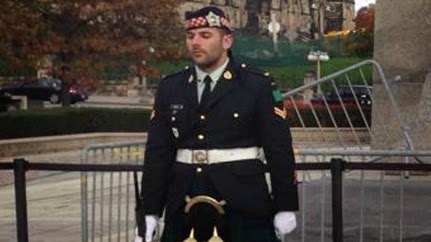
The terrible events in and around Parliament Hil last week triggered by the shocking murder of Cpl. Nathan Cirillo while standing on guard at the Tomb of the Unknown Soldier left Canadians and people around the world angered and saddened by what they saw unfolding on their television screens. In media terms, the network anchors, print and radio reporters did an excellent job under very difficult circumstances to report it in as responsible a way as they could. However, the media had to rely heavily upon Twitter® accounts for their news, resulting in inaccuracies and speculation (about a 'second gunman', another shooting at the Rideau Centre or the Chateau Laurier). That - combined with only the sketchiest of hard news from the authorities, kept the fear factor high for much of the day.
Although a great deal of appreciation is owed to our police and security personnel who managed the terrible situation, lessons can be learned about how to keep the public and the media informed while protecting the public.
5 'Crisis' Lessons that we learned from the terrible events in Ottawa: 
1. Identify in advance, and execute instantly, an Incident Command system, in which all of the key police, security, medical and other members are acting in a coordinated, coherent way.
2. Set up and utilize regular social media and traditional media channels and update throughout the event.
3. Don't leave long gaps between announcements, as the media will fill it with social media commentary and raw 'reports' that can serve to confuse, rather than inform. There was  a clear vacuum of official information throughout much of the day, as downtown Ottawa was shut down in search for the 'second gunman' who never materialized.
4. Don't hold a news conference with no news to announce. At 2 pm, the media were called to RCMP headquarters for a 'joint news conference' that mostly involved deflections, instead of advancing what we already knew. Better off not to have one until you can bring certainty to the situation.
5. Seek to reduce anxiety. Although they did a good job of inviting members of the public to share photos or video that would help in the operation, the police could have expanded on their use of social media to reduce anxiety and provide clear directions to the public on an ongoing basis.

However, those lessons should that take nothing away from the courageous and determined efforts of the RCMP, Ottawa Police Force and the heroics of the House of Commons and Senate security staff - particularly the actions of House of Commons Sergeant-at-Arms Kevin Vickers in taking down the gunman before he could inflict any further harm. The media too should receive kudos for their difficult work under fire as fear and anxiety reigned throughout downtown Ottawa.

In the aftermath, the Harper Government tabled long-delayed legislation to strengthen security provisions against terrorism. According to Ekos Research polling the public's initial acceptance of such state actions, subsides in the long run. But before the next election? That depends, of course, on when it is. However, Mr. Harper is wasting no time to find out.
POLITICS
PM unveils child tax credit plan
Within days, the Prime Minister's well-orchestrated pre-campaign announcement of income-splitting between couples combined with increased tax credits for children will mean over $1100 for the average family in their pockets. It looks like the run-up to the election is near. Combined with the Mike Duffy criminal trial scheduled for April 2015, speculation is rampant that the Prime Minister intends to pull the plug on his government in the late winter - wrapped around a balanced budget. Those tax benefits are clearly targeting not just the Conservatives base, but their 'voter universe' - including middle income taxpayers in the growing suburbs around all metropolitan centres such as the GTA.
Let's put it this way. The Prime Minister is clearly keeping his electoral options open. He wants to be in a position to go when he wants - rather than waiting for his own fixed election date of next October. One thing we know after nine years in power.

Toronto Mayor-Elect John Tory
The Toronto Mayor's race ended a little more closely than predicted, with the defeat of Doug Ford, standing in for his ailing brother Rob (who was elected Councillor for Etobicoke) and the election of John Tory. Politics in Toronto might get dull again. But, in politics, especially in Canada, being 'dull' ain't too bad eh? Having worked closely with John Tory in the past, I am confident that he will do an excellent job of moving Toronto forward, while staying off the Jimmy Kimmel Show!
Canada 150th Ad
The Power of Incumbency On the Airwaves
Of course what would politics be without advertising? Which brings me to the issue of Government ads - are they a propaganda tool? Here on the CBC News' 'The National with Wendy Mesley', I give my analysis of the thin line separating government public service ads from political propaganda. Although these ads do not cross the line in my view, but they do demonstrate the power of incumbency.


RISK 
First, whether it's Ebola or 'terrorist' actions, count on over-reactions from the public. The basic principle - which we teach in our Communicating Risk Seminar - is that  is that the public tends to underestimate real threats (flu) and tends to overestimate perceived threats that pose much less risk (Ebola).
Why?
One reason is that the traditional definition of risk was this formula: 'Amount of Hazard x Likelihood of Occurrence = Risk".
According to Peter Sandman of Rutgers University, today the definition is: "Amount of Hazard + Public Outrage = Risk".
The public was outraged once Ebola landed in Texas, and again in New York, due to medical personnel who, themselves, under-estimated their own exposure to Ebola. When the state governors over-reacted to the threat by issuing mandatory quarantine orders for all returning doctors and nurses from West Africa (without taking into account the huge disincentive for organizations such as 'Doctors without Borders'
At the political level, it translates into over-reactions by Governors Christie (New Jersey), Cuomo (New York), Lepage (Maine). Although, just yesterday, after a mounting backlash against the mandatory quarantine, New York Gov. Andrew Cuomo and NYC Mayor Bill de Blasio announced a plan to financially compensate medical personnel who volunteered to fight Ebola in West Africa.
Nurse Hickox defies the quarantine

However, Gov. LePage is losing in the court of public opinion over his enforcement of the quarantine agains nurse Kacie Hickox as she defies the Governor's actions. He appears determined to make her a hero. President Obama has moved to pick up on the growing public sentiment that it's wrong to treat medical professionals in this manner. However, we are days away from the mid-term elections, so it's all fodder for the political machines.

Jian Gomeshi in happier times
SCANDAL
Finally, the Jian Gomeshi escalating 'scandal'. As I posted early on in the unfolding story, his decision to post a 1600 word Facebook statement in which he attempted to jump ahead of the brewing scandal, only ended up triggering the Toronto Star to publish the results of its investigations, including detailed allegations from women who had powerful stories to tell that contradicted Gomeshi's attempts to paint his behaviour as 'kinky' rather than violence against women. The public outrage was so great that it backfired on Gomeshi - to the point where even his own crisis communications and public relations firms fired him! [That is usually done when the client doesn't tell you the essential truth and the firm ends up wearing the disaster.] The CBC is moving quickly to investigate his behaviour at the CBC by bringing in an outside investigator. As more and more women come forward with stories of his conduct, one can already see that the tide has shifted.
 'Never pick a fight with people who buys ink by the barrel'. (Mark Twain)
Of course, the CBC is already demonstrating that it has enormous resources to air 'the other side' of the story in which every day, Jian is looking worse and worse. Mr. Gomeshi is going to wish that he had stayed with his original storyline, that he "wanted to take some time to deal with personal issues". As normally happens in these stories, there is a rush to judgement. We need to remember, however, that he has not been charged with any crime, and even if he is, he is presumed innocent. So, even though his handling of the case has been spectacularly ineffective, we need to wait until the process is completed before deciding ultimately the true nature and extent of what he has done.
In the meantime, however, his once spectacular career has become 'toast'.

Until next time!

10/23/14

Crisis Communications 101: Overcoming Panic and Fear

Welcome back.  It's a sober day in Ottawa, with the sounds of gunfire still ringing in our ears following the terrible events of today in the Nation's Capital. As with all Canadians, as well as from friends we've been hearing from in the United States and around the world through social media, we are left with a sense of profound sadness and a realization that our world somehow won't be the same again.


Crisis Communications 101: Overcoming Panic and Fear
As with many emergencies and crises, communications is critically important to:
1. help the management of the response itself by giving people clear information and directions
2. rapidly de-escalate the crisis, and
3. create confidence in the public that the situation is being handled credibly and coherently.
So, having established those goals, let's look at how communications was handled by police, politicians and the government in the terrible events of October 22nd?
1. Speak only on facts. This was - for the most part - accomplished under very difficult circumstances, while operating without perfect information. Given that the situation was still 'fluid' or 'active' as officials said, there were bound to be contradictory information and a certain level of confusion. This was particularly true in this crisis regarding the possibility of another gunman. The gravest error - under great pressure to reassure - would have been to give false assurances that there wasn't another gunman. The simple fact is that the security and police forces couldn't rule out that possibility. As a result, the security perimeter kept widening around Parliament Hill (where the shooter was killed) and the National War Memorial (where Cpl. Nathan Cirillo was cold-bloodedly murdered).
2. Get information out quickly - even when you don't have all the answers. The police forces began tweeting very quickly with information - as well as requests for photos and videos from the public. Although it took four hours before a news conference was held, it was reasonable in the circumstances. The news conference itself, held at RCMP Headquarters, didn't provide much new information and the response to it by journalists and the public (as evidenced by social media) was one of disappointment. So, either they needed to wait until they had something more solid, or perhaps go earlier with a quick update. However, they would no doubt have been equally criticized in either of those scenarios too. All in all, it demonstrated coherent action among the RCMP, Ottawa Police, the Canadian Forces and the Mayor of Ottawa - was the best they could do in the circumstances.
A somber PM addresses the nation
3. Political Leaders need to be present - but not 'political'. The Prime Minister's Office issued a statement early on but the decision was taken for Prime Minister Harper to wait until 7 pm to speak - which some felt seemed a little late - as President Obama had made remarks and shared his condolences hours earlier from the White House. Nevertheless, the PM, as with Opposition Leader Tom Mulcair and Liberal Leader Justin Trudeau - all did an equally good job of their statements of condolences, praise and determination. Mayor Jim Watson of Ottawa also did an excellent job of conveying the feelings of the people of Ottawa at the news conference and in subsequent media interviews.
4. Communicate action that people need to take without invoking 'panic'. This, the RCMP and Ottawa Police did superbly well. Their orders to 'shelter in place' for those in downtown offices and for the rest of the public to stay away were respected and followed. [I was downtown in my car a block away on Queen St. in the first hour, and the sense of order was already apparent].
5. Manage public perceptions and expectations. This was done very well, overall. The perception of professionalism and purposeful response was evident from the beginning of the crisis. They didn't fall into the trap of 'over-promising and under-delivering' on expectations. Instead, the RCMP, Ottawa Police and Canadian Forces managed and fine-tuned our expectations well, and as the afternoon wore on, you could feel the relief start to take hold. By early evening, as with many of our neighbours, people emerged from their homes to walk their dogs, get some air, and try to feel 'normal' again.

Cpl. Cirillo minutes before on duty, R.I.P.
Our thoughts and prayers are with the family of Cpl. Nathan Cirillo, who sacrificed his young life in duty for his country. It is difficult to find the words to convey how profoundly we admire and respect his sense of devotion and the ultimate sacrifice to ensure that the public never forget those who had fallen in defence of our nation's values. Now, we in turn, owe him that determination.


A true hero, Sgt-at-Arms Kevin Vickers
Finally, amidst all of that sorrow, however, there were inspirational stories - ranging from ordinary tourists and passersby pitching in to volunteer medical aid to Cpl. Cirillo - to Parliament's Sergeant-at-Arms Kevin Vickers who saved many lives by taking down the gunman - to police, emergency and security personnel - who acted with courage and professionalism to contain and reduce what could have been a far worse tragedy today. And yes, to journalists - print, radio and TV - who kept us informed, with restraint and tact, at risk to themselves on this terrible day, thank you.
 
Follow Barry on twitter.com/mclomedia or subscribe to this blog 'Communicate with Power®' by emailing mclomedia@msn.com.

7/29/14

Politics at the movies

Coming soon...to a multiplex from hell...Politics at the Movies
     Here we are at the mid-summer mark. As it has turned out to be a particularly tragedy-laced   summer internationally - the shooting-down of Malaysia Airlines Flight MH 17 in Ukraine; the explosive and deadly bombings and killings in Gaza; the strange and tragic crash of Air Algerie in Mali...and now an Ebola outbreak in West Africa! If one cares about the world, it's not exactly the hazy, lazy days of summer, is it? 
     Laura Peck and I have been traveling - to Washington, Boston (where we completed the Certificate program, Teaching the Case Study Method at the Harvard Business School), Toronto, Labrador, Halifax and a few other places - all for work, alas, but I've tried to squeeze in a day here and there to read, think, swim and try to enjoy a pretty hit-and-miss summer when it comes to weather.
     Along with an occasional media interview, I've even managed to read a few books! Based on the recommendation of my daughter, Caroline, right now I'm deep into the second of a planned trilogy of novels about the life Cicero, by Robert Harris. The first was Imperium and the second - that I also can't put down - is Conspirata (I hope by the time I finish it Robert Harris will have announced the publication of the closing chapter!). Who knew that in the 60s B.C. they played politics as dirty and as personal as today? Now there's fewer murders, but more political deaths by Twitter® and smart phone videos. They would make a great premium cable mini-series for sure..... all of which leads me into the theme of this summer version of my blog post.
For Your Consideration...Politics at the Movies
Here are some sequels, re-makes and other summer flicks that you may want to consider as we head into the second half of summer. Will they be enough to rescue the anemic Hollywood Box Office this summer?
Putin in his first role as a typical tourist.

1. A Most (Un) Wanted Man... Now that Navi Pillay, the U.N. Commissioner for Human Rights, has labelled what happened to the shooting down - and the crash site aftermath - of Malaysia Air Flight 17, a 'war crime', perennial bad buy Vladimir Putin has done it again.


Harper freezes Putin's assets

However, in this international thriller, Putin comes head-to-head with Canada's own Stephen Harper who smacks him down by freezing his assets and those of his cronies. Will it be enough to stop the 'Back in the U.S.S.R.' tendencies of nemesis Putin? Not so fast, as Vlad [played by aging martial arts "star" Steven Seagal, who is a vocal admirer of Putin] is every bit the conniving vicious thug that one always suspected he was.


Seagal and his pal Vlad
[Spoilers ahead!] Reports that he has managed to squirrel away $40 billion into his personal bank accounts, real estate and other nefarious 'investments' just pours salt into the wounds of those who have been particularly outraged by his Ukrainian atrocities. Vlad has played the role of villain to an extent that not even John Le Carré could have imagined. Not satisfied with stealing territories that don't belong to him, Seagal shows Putin stealing upwards of $40 billion through state-sanctioned extortion and bullying on the home front. The real question is, will EU countries turn a blind eye in hopes of maintaing their oil and gas imports? Will Harper be able to rally his fellow G7 leaders to avert a global catastrophe? You don't want to miss this climax!


Bill threatens to upstage Barack
2. A Solitary Man... After years of disappointment in his dreams and dealing with his unhappy arranged marriage to the Republican-led Congress, Barack Obama [Denzel Washington] has mentally checked out from his life (but with none of the creepy fantasies and drugs from the original movie). Barack Obama has been hit with a lot of criticism as his career seems to be running out of gas. Critics say that he is 'dis-engaged' with all the big issues - while fund-raising, playing golf and dining with his Hollywood pals. Does his 'no-drama Obama' persona give people the impression that he's lost interest? As the movie reveals, Barack is never going to be the Bill Clinton 'feel your pain' kind of President no matter what. But can he pull it together for a final act to cap his career? Stay tuned!
3. Secondary Colors... With Emma Thompson reprising her Primary Colors role, this sequel switches focus as Bill [played once again by John Travolta] plays second fiddle to Hillary who is gearing up  for the Presidency in 2016. All jokes about pants suits and bad hair days have fallen by the wayside as Hillary proves she's up for the role of her lifetime. Yes, she stumbles - in one poignant scene, she tries to relate to ordinary folks, claiming she and Bill were essentially 'broke' when they left office. (Somehow, knowing each had a multi-million dollar book deal awaiting their signatures, triggered audience hisses and boos in the screening I attended.) Her speech-making fees  -  upwards of $250,000 - puts her in the category of ... well....Bill! So, there will be no pity party for her as she revs up her campaign early in the New Year. Although nothing is a done deal (as she herself learned in 2008), this movie promises that Hillary will be a formidable candidate. No more 'Tammy-Wynette-stand-by-your-man' for her. The only vacuuming going on in this movie is the dollars from the pockets of Democrat donors. 
House of Cards- Trudeau, Harper, Mulcair
4. House of Cards: Another Foreign Adaptation... Frank Underwood would have a field day with this trio of politicos up north. The versatile Kevin Spacey hits the mark with this Canadian Netflix-only version of the political drama. This Hollywood North taxpayer-subsidized soap opera highlights the looming horse race in the 2015 federal election race, among Stephen Harper [Kevin Spacey], Justin Trudeau [Rob Lowe] and Thomas Mulcair [Tommy Lee Jones - he's can't capture the 'bearded Canadian intellectual' side of Mulcair, but he can play the crotchety aspects in his sleep]. The movie shows that anything can happen in an election campaign.  It deftly illustrates what happened in recent provincial campaigns - Quebec and Ontario when the pundits had it wrong.  The RCMP's laying of 31 charges against Mike Duffy [deftly played by SNL's Bobby Moynihan] triggers Tommy Lee Jones - as Mulcair - to play the defining role of his career - as the coldly incisive prosecutor. Although Mr. Mulcair would be best to remember that no one loves the prosecutor.

So, as we approach the Mid-Summer Night long weekend, it's perhaps the last chance for Hollywood to recover from a less-than-stellar box office summer. Let's hope that the movie of your summer beats anything that you see here! 

Until next time.....


6/24/14

We'd like to keep in touch


Welcome back to Communicate with Power®


We'd like to keep in touch!

To comply with Anti-Spam laws, we're asking for our permission to send you communications via email. Please provide your email address below to consent receive my periodic blog.

Rest assured that we respect your privacy, and your email address will not be sold or given to any third party. Consent can be withdrawn at any time by emailing me directly, or by clicking the 'unsubscribe' link shown on the blog.


Email Address: _________________________


PLEASE SEND ME THIS CONSENT BY RETURN EMAIL. Thank you!


Barry J. McLoughlin


4/16/14

Jimmy, we hardly knew ye

Welcome back...

'Jimmy, we hardly knew ye'
This post is devoted to Jim Flaherty whose State Funeral was broadcast earlier today. Laura and I were working in Los Angeles traveling when our son Brendan phoned us with the shocking news of his death last Thursday.  Although we've been in Winnipeg the past few days,  we were able to make it back home just in time to catch the broadcast. While flying home, I thought back over the Jim Flaherty that I knew.
Jim's gift of friendship
Jim had the gift of friendship and there were many more who had deeper, long-lasting friendships with him, than I. However, being in the business of media training and coaching, I had the privilege of working with Jim Flaherty in his various Cabinet portfolios provincially, as well as his first leadership run. Several years later, as Finance Minister he came to me to prepare him prior to the delivery of his first Budget Speech. In between, Laura and I would bump into him on many different occasions and we always enjoyed our conversations.
The last time I spoke with him
Being Irish-born, I found it easy to strike a rapport with him - a friendship which stayed true all the way through, including the last time we chatted a few weeks ago. It was after Sunday Mass at Notre Dame Cathedral and as Laura and I introduced to him our young adult children - Caroline, Brendan and Liam, we all joked about our shared propensity for Irish names. That triggered the rest of the conversation that was mostly about his three sons - Galen, Quinn and John. He positively glowed as he spoke of them. Although he clearly looked like he was struggling with his health, he was as hard-working as ever. In fact, he was on his way to the office to put the final touches on his Budget Speech - the last one he was to deliver, only a day later. When he resigned from Cabinet a few weeks later, we all thought that now he would be able to take the time to rest and get his health back. Tragically, it was not to be.
                                                     Jim 'slips away to the next room'
The State Funeral - with everyone wearing green ties and scarves in his honour - was a great tribute to Jim, as he was one of the most significant Finance Ministers in history. Prime Minister Harper did a superb job of capturing - with humour and emotion - both the tender side and the tough, determined side of Jim Flaherty. He revealed his own feelings as he addressed Jim's three sons, Galen, John and Quinn, about how he dealt with the loss of his own father eleven years ago. It was a very meaningful comment from a Prime Minister who doesn't often reveal his own personal feelings. Jim's family were remarkable in their poise and their tributes, that gave us insight into his role as a devoted father and a husband. Quinn's message to his father was both humorous and touching: "Put your feet up. Lay your head back. Close your eyes and relax. We will take it from here." And they did!
His wife Christine Elliott, M.P.P., in one of the most unimaginably difficult things to do, gave a wonderful tribute, including these lines from the ballad, Death is Nothing at All, by Henry Scott Holland:
"Death is nothing at all.
I have only slipped away to the next room.
I am I and you are you.
Whatever we were to each other, 
That, we still are.
Call me by my old familiar name.
Speak to me in the easy way
which you always used.
Put no difference into your tone.
Wear no forced air of solemnity or sorrow.
Laugh as we always laughed
at the little jokes we enjoyed together.
Play, smile, think of me. Pray for me.
Let my name be ever the household word
that it always was.
Let it be spoken without effect.
Without the trace of a shadow on it."


His sister Norah, in her funny but profound tribute, revealed that his siblings and parents always called him 'Jimmy'.
Jimmy we hardly knew ye
The Irish song, "Johnny I Hardly Knew Ye" was used as the title of a book by Kenneth O'Donnell and Dave Powers about their boss, John F. Kennedy, that is a wistful way of saying, 'I'd wished we'd spent more time getting to know you'. That would capture how most people who knew him would feel about 'Jimmy' Flaherty.

On a personal level, what will be left behind was the memory of his laughter and deft wit - sardonic, self-deprecatory and playful - that left one feeling better about life and the world. He told more with his eyes than with his words at times. Helpful, in the sound-bite world inhabited by a Cabinet Minister whose every word is measured by the markets.

Something else stays with me in his personal story.  While he was a Princeton student, Jim supported himself by driving a cab and bussing tables. I think that tells us a lot about his character and his ability to understand the realities of people's lives, and of those who need a 'hand up' [as illustrated by The Abilities Centre he created in his beloved hometown of Whitby].

His most significant contribution, of course, was his handling of the October 2008 economic meltdown, and the actions that he took - in concert with the Prime Minister and the Governor of the Bank of Canada, Mark Carney - to save the jobs of hundreds of thousands of Canadians and to ensure the continued flow of money in the economy.

As we saw in the State Funeral and in all the tributes that were shared in the days following his death, was how he was able to maintain personal friendships and respect across the aisle. Even though he had a partisan streak in him and could fight fiercely for what he believed, he had the gifts of friendship and empathy and was able to develop friendships with politicians of every stripe. We need more Jim Flahertys'!

So, to adapt a toast from one of my favourite movies, 'Waking Ned Devine',
"Take a drink and remember the man. And raise your spirits to the sky. Raise them to Jim Flaherty. God bless you Jim, and may we be forever in your debt." 

Jimmy, we hardly knew ye!

4/4/14

6 Rules for Managing a Scandal

Welcome back! It's been a whirlwind time at McLoughlin Media as we celebrate our 30th anniversary in April. Laura and I have been traveling from New York (media training); to L.A. (message development); to Montreal (media training); and Toronto (presentation skills). Earlier this week I was in beautiful St. Louis doing a seminar in crisis communications. So life has been busy.

Just yesterday, we completed the term for our course, 'Political Management and the Media' in the Clayton H. Riddell Masters of Political Management program at Carleton University. Once again, a great group of students who represent the political spectrum and who are an inspiration for the future of politics.

On April 7th Laura and I will be attending the Women in Communications and Technology Awards Gala at the Westin Hotel in Ottawa where Laura will be receiving the Communications Excellence Award. Congratulations Laura!
After that, Laura and I are back in L.A. where we are on a panel discussion at the Spring Meeting of the American Bar Association, April 11th, called "Scandal Scarred: Managing Your Clients Through a Political or Government Scandal.  We're looking forward to it.

Which brings me to my topic of this post....

Six Rules for Managing a Scandal
Over the past thirty years, we have consulted on behalf of clients in the political, corporate, government and non-profit sectors. Here are some rules for managing scandals.
1. Make sure your client doesn't become a joke. This week's outrage was that Mayor Ford had to stand up and change two votes - in which he had voted AGAINST Council congratulating Canada's Olympic and Para-Olympian teams, and AGAINST naming a street after Nelson Mandela. Jimmy Kimmell had another field day with that piece of news, and even Bill Clinton weighed in [ironic isn't it?] Interestingly enough, it looks like Rob Ford will probably avoid criminal charges for his actions, but will it save his political future? Right now, it's even odds that he could pull off a victory in October against John Tory and Olivia Chow, as they seem determined not to bring up the Mayor's ahem peccadillos.
Dimitri and Eve
2. Don't bring in people who are 'toxic' to manage other people.
The antics of Conservative MP Eve Adams and her fiancé, Conservative Party Executive Director Dimitri Soudas have tripped up Prime Minister Harper's efforts to shake loose last year's Senate 'Scandal'. Now that Mr. Soudas has been let go, there isn't anyone in his camp willing to defend him.

3. Turn the channel. Mr. Harper's strongest suit as Prime Minister was on show last week as his visit to Ukraine, Germany and the G7 in Brussels showed him to be resolute in his stance for justice and call to action on Putin's take-over of Crimea. However, when he arrived home to the swirling controversy over the Dimitri Soudas-Eve Adams side-show, he must have been furious that he couldn't spend one day basking in the success of his European trip.


Premier Redford Takes Her Leave
4. Style of leadership matters. The resignation of Alberta Premier Alison Redford underscores the importance of leading by listening and motivating - not by command and control. A government requires a team. It is not a one-person power machine. No matter the progress she was making in Alberta's economy and development, her style began to grate - first internally, and then with the public.


5. Understand and respect your own brand. Every successful government understands its brand - that is, it's promise to voters. New Jersey Governor Chris Christie still hasn't recovered the damage to his 'just folks, man of the people' brand as a result of the 'Bridge' scandal. In Canada, for three elections, the Conservative brand was powerfully and persuasively built, but it has eroded badly since the last election - on political reform, the military, veterans and even solid management. The Conservatives have only 18 months to re-discover their brand and get off the defensive.
6. Make sure your message hits the target. The government's 'Canada's Economic Advantage' campaign is long in the tooth and has lost its ability to move the dial. The party's 'He's in way over his head' personal attack ads on Justin Trudeau seem weirdly personal (clips of him removing his shirt) and not serious.  Justin Trudeau's F-bomb at a charity boxing match last week, followed by his cursing on television last night won't cause permanent damage. However, it does play into the counter-narrative that the Conservatives have proven so adept at creating - with former Liberal leaders Stephane Dion and Michael Ignatieff. Will lightning strike three times? Although Mr. Trudeau seems to have a teflon coating, the Conservatives are betting heavily that the attacks will start to stick.

So those are only some of the rules for managing a scandal. But they're a start!

Until next time......welcome to spring!

Check out our latest pocket tips books.